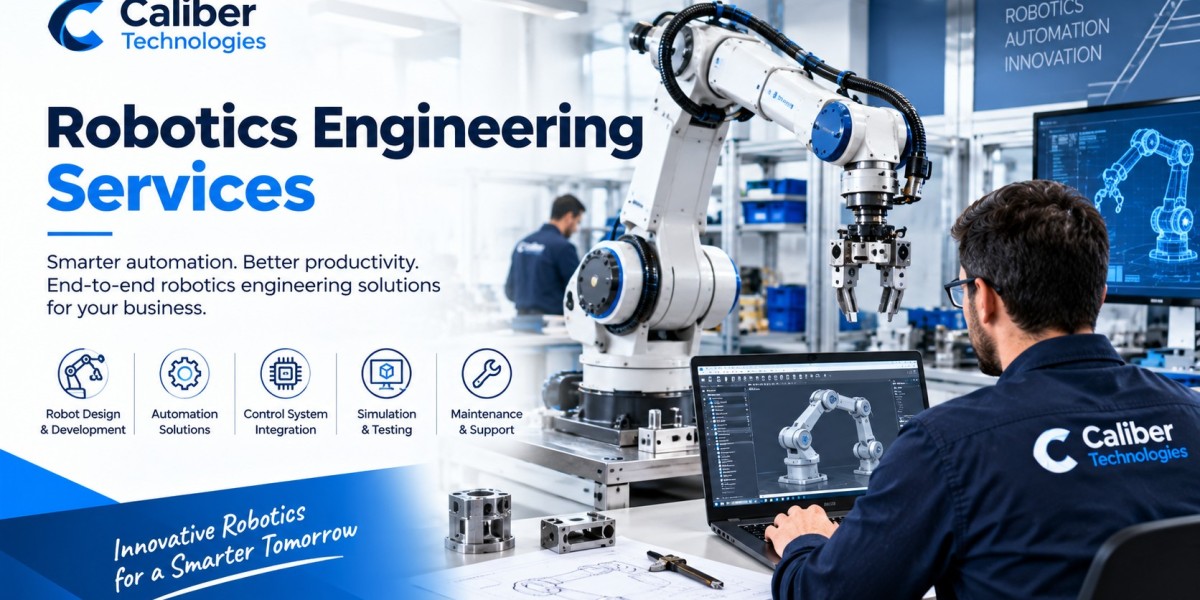

Robotics Engineering Services help businesses design, develop, and implement robotic systems that improve how work is performed. By combining mechanical engineering, electronics, control systems, and software development, these services turn automation requirements into practical solutions. Companies use robotics for tasks such as assembling products, moving materials, inspecting components, and operating equipment in environments that may be repetitive, demanding, or hazardous.
As manufacturing and other industries seek better productivity and consistent product quality, robotics offers opportunities to improve existing processes. However, successful automation requires more than buying a robot. Businesses must identify the right application, evaluate technical requirements, integrate equipment with existing systems, and plan for safe operation and maintenance. Professional Robotics Engineering Services support this process, helping organizations choose solutions that match their operational needs and long-term objectives.
What Do Robotics Engineering Services Include?
Robotics engineering covers the complete process of planning, designing, programming, testing, and integrating robotic equipment. The scope can range from adapting an existing industrial robot to developing a custom machine for a specialized task.
Mechanical and Electrical Design
Mechanical design determines the robot's physical structure, movement, joints, and working tools. Engineers consider payload capacity, reach, speed, rigidity, and the available workspace. These factors influence whether a robot can perform a task accurately without excessive wear or mechanical stress.
Electrical engineering focuses on motors, drives, controllers, power systems, wiring, and sensors. Components must be selected to support the required performance while maintaining reliable operation.
For example, a robot handling heavy components needs a suitable gripper, sufficient structural strength, and a control system designed to manage its load. Poor component selection can cause inaccurate movement, equipment damage, or unnecessary maintenance.
Robotics Programming and Control Systems
Robotic hardware relies on software to execute instructions and coordinate movement. Programming services may include motion planning, sequence control, sensor communication, fault detection, and operator interface development.
Consider a robot that assembles small electronic products. It may need to identify a component, pick it up, position it precisely, and confirm that it has been installed correctly. Its control software must coordinate each action and respond appropriately if a component is missing or incorrectly positioned.
Sensors and Machine Vision
Sensors allow robots to measure position, distance, force, and other operating conditions. Machine vision systems use cameras and image-processing software to identify objects, inspect products, or guide robotic movements.
A vision-guided robot can locate items on a conveyor even when their positions vary. This can reduce the need for perfectly aligned products, provided the vision system has been designed and tested for the expected range of variations.
Major Applications of Robotics Engineering
Robotics engineering supports a wide range of industries. The most suitable technology depends on the task, operating environment, required accuracy, and expected production volume.
Industrial Automation
Industrial robots are commonly used for welding, painting, assembly, packaging, machine tending, and palletizing. They can repeat defined movements consistently, making them valuable for high-volume operations.
For example, a manufacturer may use a robotic arm to load parts into a machine while employees supervise production and conduct quality checks. This arrangement can improve workflow while allowing workers to focus on tasks that require judgment or problem-solving.
Collaborative Robotics
Collaborative robots, often called cobots, are designed for applications where people and robots may work close to one another. Common uses include light assembly, inspection, packaging, and repetitive material handling.
A collaborative robot is not automatically safe for every shared workspace. The complete application must be assessed, including the robot, attached tools, workpiece, movement speed, and potential contact hazards. Additional protective measures may be required.
Warehouse and Material Handling
Autonomous mobile robots transport goods and components between locations in warehouses, distribution centers, and manufacturing facilities. They use navigation technology and sensors to move along planned routes and respond to obstacles.
Successful implementation requires attention to pedestrian traffic, floor conditions, charging arrangements, route planning, and integration with warehouse management systems.
Inspection and Specialized Robotics
Robotic systems can also support agriculture, healthcare, laboratory automation, infrastructure inspection, and hazardous-environment operations. Inspection robots may examine confined spaces, while agricultural robots can assist with monitoring crops or performing targeted tasks.
Specialized applications often require custom equipment because environmental conditions, precision requirements, and operating risks vary significantly.
The Robotics Engineering Development Process
A structured development process helps businesses identify risks early and confirm that the final system meets its intended purpose.
1. Requirements and Feasibility Assessment
Engineers begin by examining the task and current workflow. They assess production volume, cycle time, product characteristics, workspace, existing equipment, and operating conditions.
The team then defines measurable objectives, such as the number of units processed per hour, required positioning accuracy, or acceptable error rates. A feasibility assessment also considers whether the expected benefits justify the investment.
2. Design and Simulation
Engineers develop the system layout, select suitable components, and plan robotic movements. Computer-aided design and simulation can reveal reach limitations, potential collisions, and inefficient motion paths before equipment is manufactured or installed.
Simulation helps identify certain design problems early, but it cannot reproduce every real-world condition. Physical testing remains necessary to verify performance under actual operating circumstances.
3. Prototyping and Validation
A prototype allows engineers to evaluate movement accuracy, gripping performance, sensor response, cycle time, and fault recovery. Testing should use representative products and realistic working conditions.
For instance, a robotic gripper should be tested with different product sizes and surface textures if those variations occur during production. This helps determine whether the design can handle normal operating variation reliably.
4. Integration and Commissioning
Once testing confirms the design, engineers install the system and connect it to relevant machines, controllers, sensors, software, and safety devices.
Commissioning verifies that the complete installation meets agreed performance requirements. Operators should also receive training on normal operation, emergency procedures, and basic troubleshooting.
5. Maintenance and Performance Monitoring
Robots require routine inspections, appropriate software updates, and replacement of worn parts. Monitoring operating data can help identify recurring faults, unusual delays, or changes in performance.
A planned maintenance schedule is particularly important when one robotic station supports several downstream production activities.
Practical Benefits of Robotics Engineering Services
Increased Productivity and Repeatability
Robots can perform repetitive tasks at consistent speeds and may operate for extended periods when properly configured and maintained. This is useful for assembly, packaging, material movement, and machine tending.
However, productivity depends on the complete workflow. A robot cannot overcome delays caused by unavailable materials, poor scheduling, or slow downstream equipment on its own.
Improved Product Quality
Robotic systems can reduce variation in repetitive operations and help maintain consistent process conditions. Machine vision may also identify certain defects before products proceed to the next stage.
The results depend on appropriate equipment selection, calibration, programming, and regular quality checks.
Better Workplace Safety
Robots can take on selected tasks involving heavy loads, repetitive physical movements, high temperatures, or hazardous substances. This can reduce workers' exposure to specific workplace risks.
Robotic equipment also introduces hazards, including crushing, collision, and unexpected movement. Proper risk assessment, guarding, interlocks, emergency stops, and operator training are essential.
More Effective Resource Use
Automation may reduce material waste, rework, and unnecessary handling. It can also allow employees to focus on maintenance, quality assurance, and process improvement.
Businesses should assess total ownership costs, including equipment, installation, integration, training, energy, maintenance, and downtime, before calculating potential financial benefits.
Common Challenges and Considerations
Initial Investment and Return
Custom robotic systems can require significant upfront spending. Companies should estimate realistic savings, operating costs, expected equipment life, and the potential impact of production interruptions.
A pilot project can help verify performance assumptions before automation is expanded across a facility.
Integration With Existing Equipment
Older machines may lack compatible communication interfaces or modern control features. An early technical review can identify required upgrades and reduce unexpected integration costs.
Workforce Training and Technical Support
Employees need suitable training to operate and maintain robotic equipment. Businesses should plan for documentation, troubleshooting procedures, and access to technical support before the system enters regular operation.
Flexibility for Future Changes
Products and workflows may change over time. Modular equipment, adaptable software, and interchangeable tooling can make future adjustments easier, although the effort required depends on the original design and the complexity of the new task.
How to Choose a Robotics Engineering Provider
Choose a provider with experience relevant to your industry and the technical ability to manage design, programming, integration, testing, and ongoing support. Ask how the team evaluates safety, measures performance, documents the system, and handles problems after installation.
A reliable provider should explain the proposed solution's capabilities, limitations, project schedule, and maintenance requirements. A feasibility study or pilot demonstration can help establish whether the system meets real operational needs before a larger investment is made.
Frequently Asked Questions
1. What are Robotics Engineering Services used for?
They help businesses design, program, test, and integrate robotic systems for manufacturing, material handling, inspection, assembly, agriculture, and other automation applications.
2. Can robotics engineering solutions be customized?
Yes. Engineers can tailor robotic systems to specific products, workspace restrictions, production targets, safety requirements, and existing equipment.
3. Are robotic systems suitable for small businesses?
Yes. Small businesses can begin by automating one repetitive or time-consuming task. A focused solution may offer measurable benefits without requiring a complete facility redesign.
4. How long does a robotics engineering project take?
Project duration depends on system complexity, equipment availability, software development, testing, and integration. A simple installation generally takes less time than a fully customized robotic system.
5. How can a business measure automation performance?
Useful measures include production output, cycle time, defect rates, downtime, maintenance expenses, safety performance, and total operating costs. Comparing these results with the original project objectives helps assess the project's overall value.
Conclusion
Robotics Engineering Services help businesses turn automation requirements into reliable, practical systems. Through mechanical and electrical design, software development, simulation, testing, and integration, engineering teams can create robotic solutions for manufacturing and many other industries.
Successful projects begin with clear objectives, realistic financial planning, suitable technology, and careful safety assessment. By considering long-term maintenance and preparing employees for new processes, businesses can improve consistency, reduce avoidable waste, and build more efficient operations.