

What does an Excavator dark web link actually lead to, and how can you judge whether it is safe to investigate? A search engine associated with the dark web can help surface onion services, but finding a result is not the same as verifying the destination, its operators, or the material it contains.
This guide explains what an excavator dark web search engine can and cannot do, how to assess links, and how to reduce avoidable exposure while researching. It focuses on practical checks and lawful information gathering, rather than treating anonymity as a guarantee or search results as endorsements.
Key Takeaways
- Search engines can index onion services without confirming their safety or legitimacy.
- Verify an onion address through independent, trusted references before opening it.
- Use a hardened browser setup and avoid sharing identifying details during research.
- Treat search results as leads, not proof that a site is trustworthy.
What does an Excavator dark web search engine actually index?
Dark web search tools generally gather information from services reachable through privacy networks such as Tor, then make some of that material searchable through an index. Coverage depends on whether a service is discoverable, accessible to the crawler, and still online when the index is refreshed; onion addresses can change or disappear without notice.
That means an excavator search engine dark web result may be incomplete, stale, or poorly described. Search snippets can omit context, and indexed pages may link onward to unrelated destinations, so treat the result as a lead to investigate rather than a directory that certifies the site.
How can you verify an Excavator link before opening it?
Start by checking the complete onion address against more than one independent source that you already trust, such as an organization's official clearnet page or a known public statement. Do not rely on a matching name or logo alone: impersonators can copy both while substituting a different address.

Examine the address character by character and avoid shortened links or instructions to install an unknown file. When researching a particular service, a reliable Excavator Tor reference can help explain the verification context, but it should supplement-not replace-checking the address through an independent channel.
What should you do if an onion address has changed?
Do not assume that a newly advertised address is legitimate just because an old one no longer loads. Look for a dated notice from the service's established official channel, compare the announcement with another credible reference, and be cautious if the only source is the new site itself.
If the change cannot be independently confirmed, stop there and preserve the old address only as an unverified research note. A dead link can indicate routine downtime, a domain change, or a service that has vanished; none of those possibilities proves that a replacement link is authentic.
Which privacy and security precautions matter during research?
Use the Tor Browser obtained from its official distribution channel, keep it updated, and avoid adding extensions that can alter its protections or expose identifying information. Do not resize or customize the browser unnecessarily if your aim is to reduce fingerprinting; unusual settings can make a device easier to distinguish.
Separate research from personal accounts and avoid entering real names, email addresses, payment information, or workplace credentials. A browser can route traffic through Tor, but it cannot prevent a user from identifying themselves through forms, downloads, reused usernames, or actions outside the browser.
How should you handle suspicious pages and downloads?
Leave pages that demand an unknown plugin, a browser update from the page itself, or a file before revealing basic information. Never open unexpected downloads on a device containing sensitive work; if a legitimate research need requires file analysis, follow your organization's approved isolated-environment procedures.
Also avoid enabling scripts or changing security settings just to make a page work. If the information is important, seek a safer version from a recognized source or document what is inaccessible rather than taking a risk that adds little research value.
How do Excavator results compare with other discovery methods?
Search engines are useful for finding indexed pages quickly, while curated directories may provide context but can become outdated or compromised. Directories and search results both require verification; neither establishes that a service is legal, safe, or operated by the entity it claims to represent.
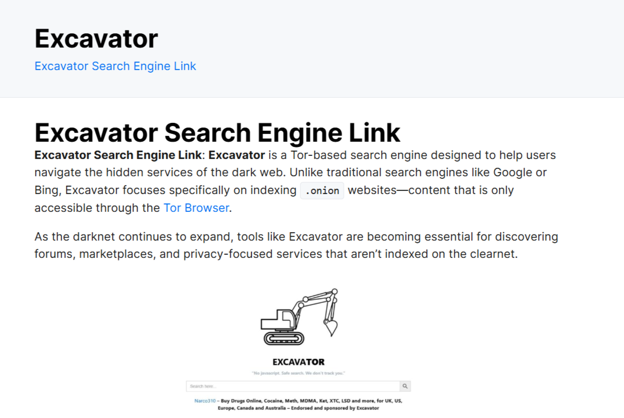
For a focused investigation, compare the methods by what they can establish, not just by how many results appear. The table summarizes practical trade-offs; an Excavator Search Engine source may offer a useful comparison point when you are evaluating discovery methods, provided its claims can also be checked.
| Method | Useful for | Main limitation | Practical check |
|---|---|---|---|
| Search index | Finding indexed pages by terms | Coverage can be stale or incomplete | Confirm the address independently |
| Curated directory | Finding links grouped by topic | Entries may be outdated or manipulated | Check the listing date and source |
| Official organization channel | Confirming an organization's own address | May not discover unrelated services | Use a channel established independently |
| Direct address | Returning to a known service | Typos or copied links can misdirect | Compare every character with a trusted record |
For example, suppose a result claims to be a research archive and displays an onion address. Record the address, check the archive's official public page for a matching announcement, then compare that announcement with a second credible reference; if those sources disagree, do not proceed as though the search result resolved the uncertainty.
Is the Excavator search engine suitable for sensitive research?
Suitability depends on the threat model and the research purpose, not the search tool's name. A person exploring public-interest material may need a different level of controls from a journalist handling confidential sources, and neither should infer that Tor removes all risks.
Before searching, decide what information you must collect, what data you must not expose, and how you will store notes. Readers comparing approaches can consult Excavator for additional context, then apply their own legal, organizational, and safety requirements before visiting a service.
Frequently Asked Questions
Is every result from an Excavator dark web search engine a working onion site?
No. Indexes can contain outdated addresses, inaccessible pages, or links that were never checked for current availability. Confirm a result independently before treating it as active.
Can a search result prove that an onion service is legitimate?
No. A result shows only that a page or reference was indexed. Confirm the address through an established, independent source and consider the service's purpose and claims.
What should I do if two sources show different Excavator links?
Do not open either as trusted until you resolve the mismatch. Check official channels and reliable archived statements; if the conflict remains, record the address as unverified and stop.
Does Tor Browser make downloads from onion sites safe?
No. Tor protects aspects of network routing but does not make files harmless. Avoid unexpected downloads, and follow approved isolated-analysis procedures if a legitimate research task requires inspection.
Can I use the same account details on onion services as elsewhere?
Avoid reusing identifying usernames, passwords, or personal email addresses. Reuse can connect separate activities and may expose accounts if a service is deceptive or compromised.
What is the safest response when an onion page asks for a plugin?
Close the page rather than installing it or weakening browser protections. Look for the information through a recognized alternative and do not provide credentials or personal details.